

By Luz Saint Phat – luzsaintphat@comercioyjusticia.info
Cases of “justice by one's own hands” and persecution by ordinary citizens of those who commit a crime - which often takes the form of revenge - is, unfortunately, a phenomenon that has an increasing presence in our society.
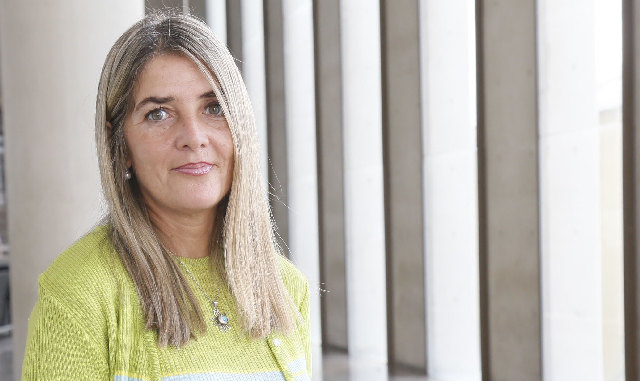
Marcela Scarafia has a master's degree in Neuropsychology and an official psychologist expert of the Judicial Branch of the Province of Córdoba. Starting tomorrow he will teach the course “Psychology, Justice and Society” at the Faculty of Psychology of the National University of Córdoba (UNC). In dialogue with Comercio y Justicia, the specialist reflected on some aspects linked to this type of violence.
-What are the factors that contribute to the recurrent cases of “justice by one's own hands” in our society?
-I think it is a general feeling of abandonment and lack of protection on the part of the State towards its citizens. Abandonment is abuse and, if we make a parallel, children of abandoned parents are either submissive or aggressive, in general (although, of course, there are individuals who are resilient and can resolve their lives). But when we have a State that is abandoned, abusive or hostile, a feeling of lack of protection is generated and that causes hostility. And although the consequence is a reaction - perhaps - of disproportionate violence to the stimulus, it is the first response that emerges when a key situation appears and a set of accumulated tensions previously exists. In this sense, when faced with a situation in which one has felt violated, the reaction can be disproportionately violent. Also, there is a transmission effect between people, which generates the emboldening of people. The problem is that it is a disproportionate reaction, unregulated and outside the law. Therefore, it is up to each subject to decide which corrective measure to apply.
-What consequences do these types of events have for the individual psyche and also for communities?
-By way of inference, I believe that the main consequence is the reinforcement of the idea that this is the way to solve conflicts. A kind of legitimization of violence as a way to confront problems to which, many times, the State does not provide answers. The important thing to keep in mind is that when these situations continue over time, they begin to be incorporated as a 'way of being in the world', as a 'way of being in the world', and it seems to me that that is the greatest risk we are running. Responding violently to a feeling of vulnerability begins to form part of the vital field of individuals and that is transmitted from generation to generation.
-What preventive strategies or actions can be carried out?
-The first thing is to make the population aware that this is not the way to resolve conflicts. It is important for people to be able to keep in mind that whoever they are lynching, for example, could be one of them who made a mistake. But I also believe that it is necessary to develop prevention policies from the State, which is something that is not being done. More and more punitive laws are being passed but there is no prevention to prevent these crimes from being committed. That doesn't make sense, it has no value or good results. Extremely punitive systems have never worked well.
-How can psychology contribute to the generation of a preventive strategy?
-I believe that contributing to the evaluation of the panorama of what the problem is like and how this feeling of being exposed, of feeling vulnerable, works intrapsychically in the subjects. Discipline can also contribute with knowledge about how we can make individuals feel protected. As an example, people who have grown up with a sense of security and containment are temperate in their character and do not need to react violently because they feel safe and protected. But I don't think that an immediate and partial measure can be taken, I think it has to do with a comprehensive approach to the way the State works. To a large extent, these are political decisions.

 English
  Spanish